Contents
From seed to harvest
A practical book for one crop. Set your zone, then read in order — or skip to companions, seed saving, or the harvest week you are in.
You are in Zone 6. Start indoors Mid-February – early March, transplant Mid- to late April. Harvest June – October.
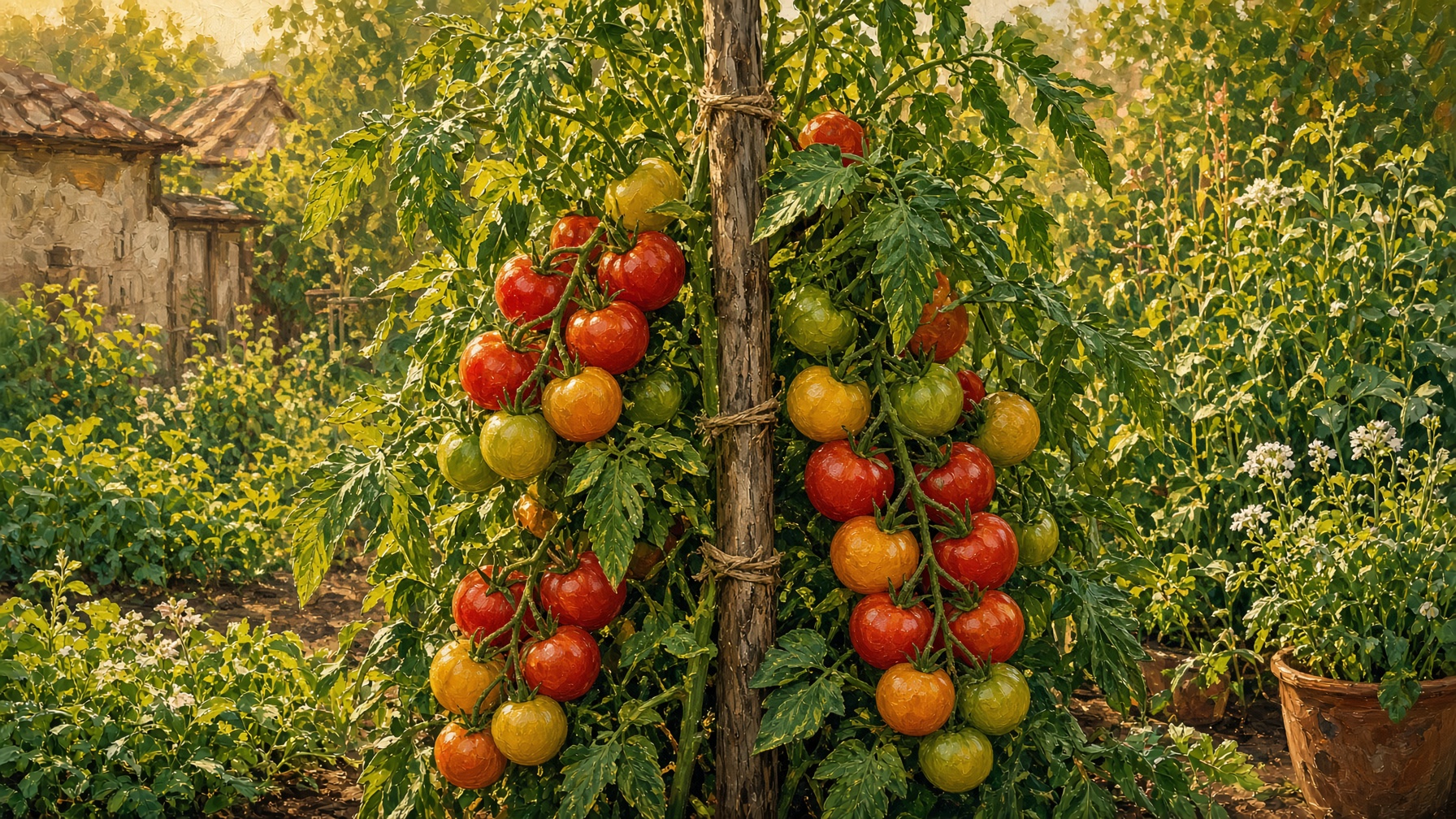
01
Before You Begin
What a tomato asks of you, and what it will give back if you meet it halfway.
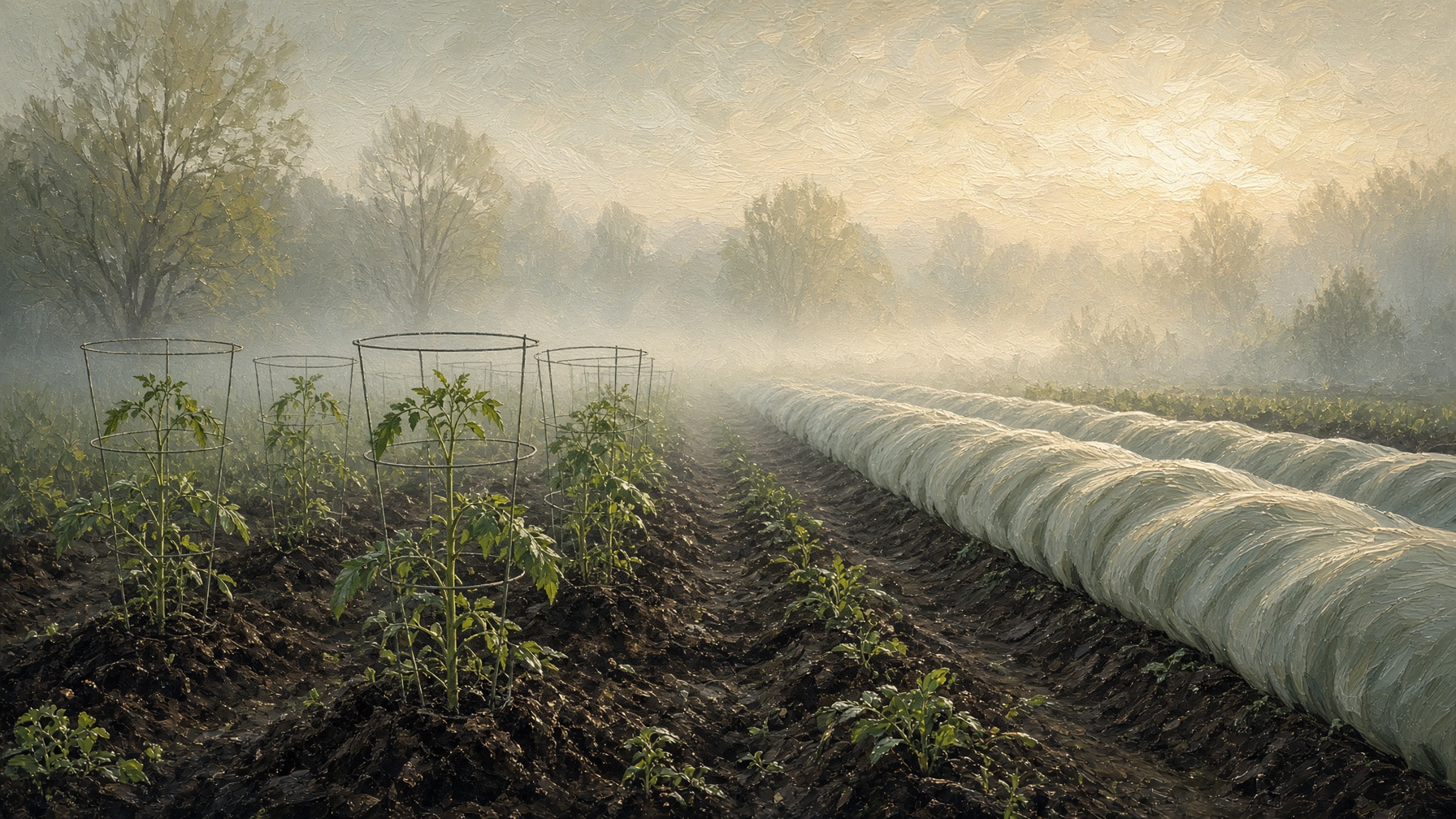
02
Climate and Zones
Match the crop to your frost dates. Tomatoes do not forgive a cold soil or a surprise September freeze.
03
Choosing Varieties
Habit, days to maturity, and whether the seed will come true — those three decisions shape the year.
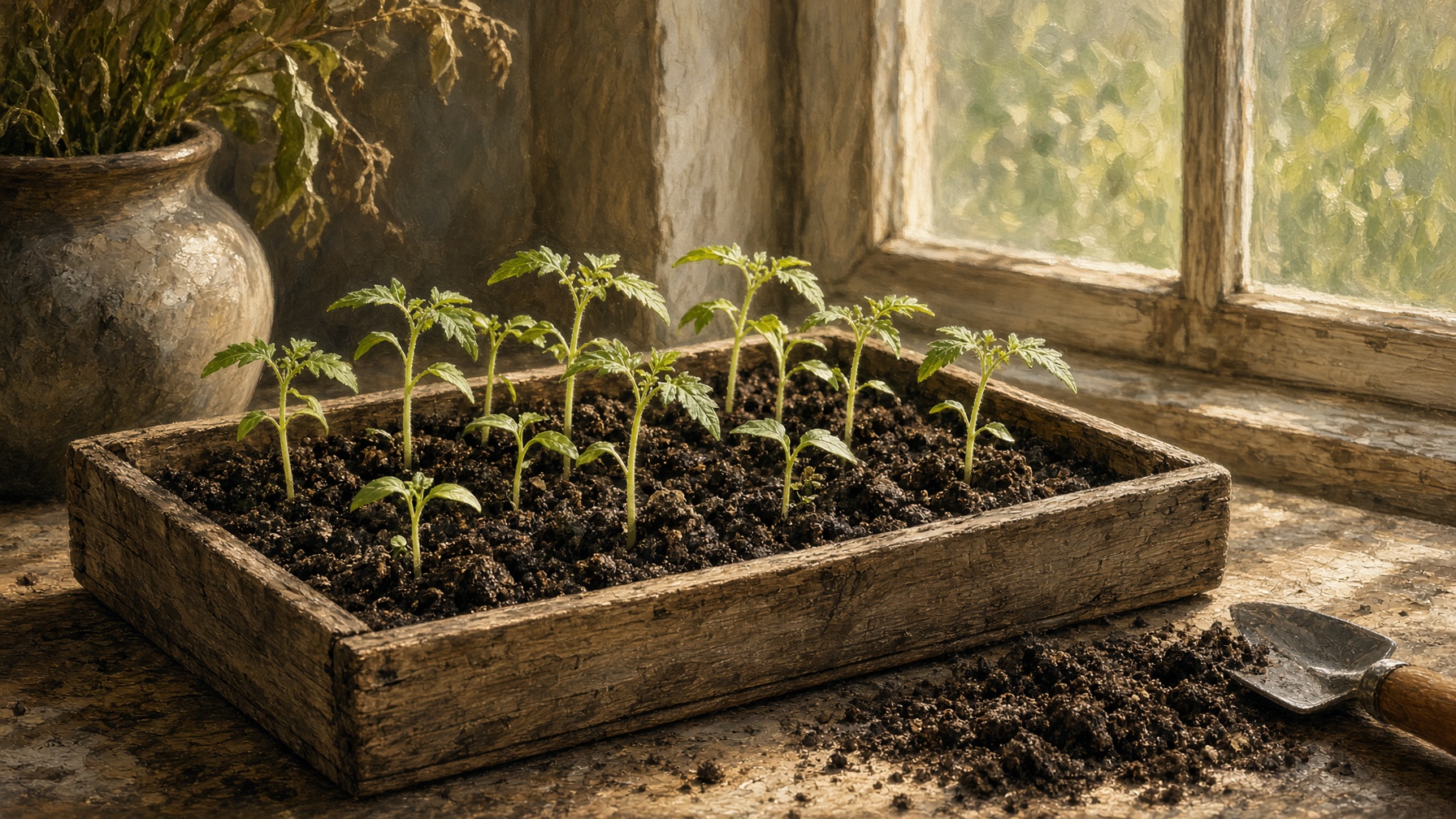
04
Starting from Seed
Stocky, unhurried seedlings beat leggy ones every time. Light and warmth do most of the work.
05
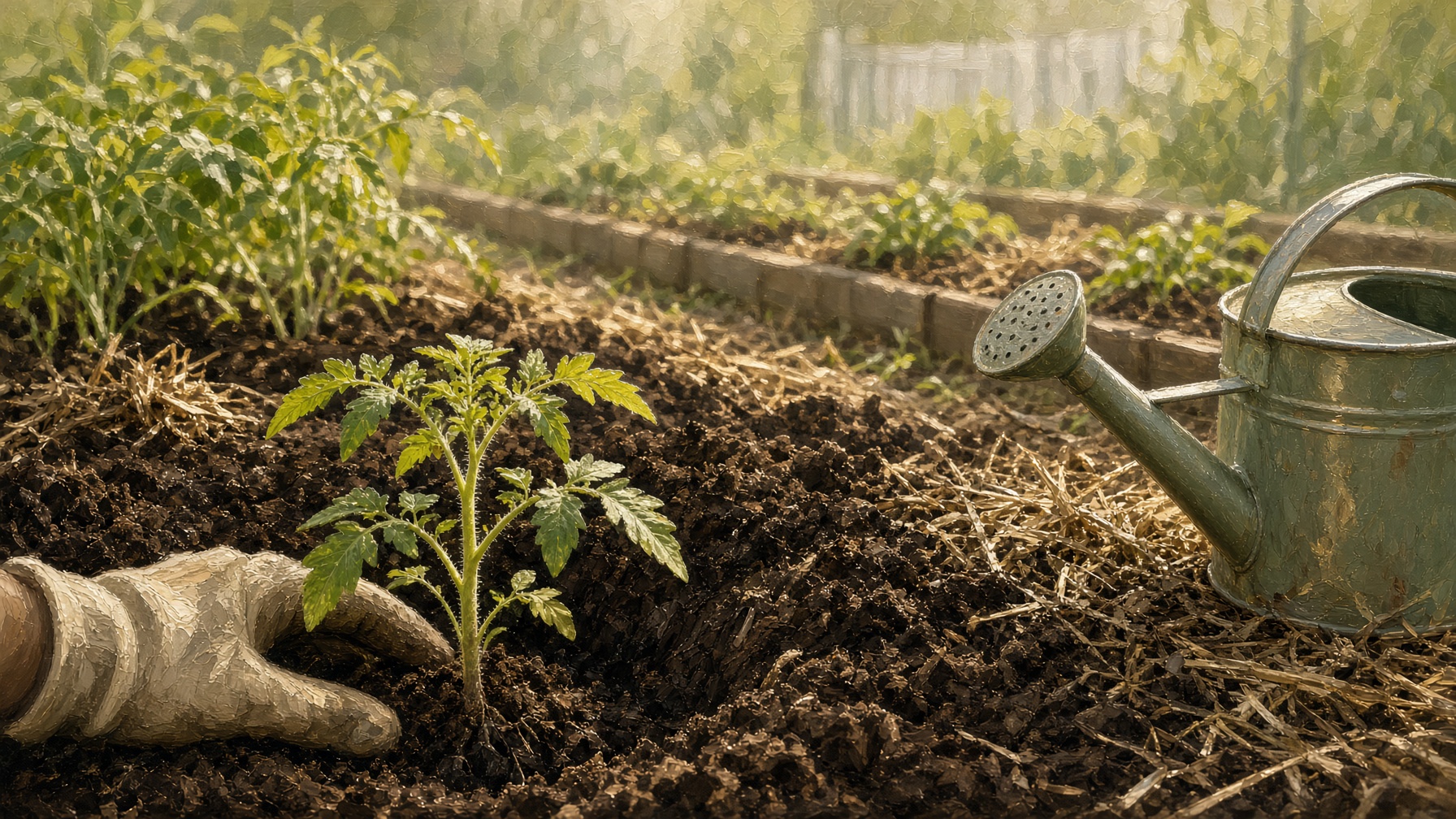
Soil, Site, and Planting
Bury the stem, give them sun, and do not crowd. Most later trouble starts here.
06
Care Through the Season
Even moisture and dry leaves. That is most of the job.
07
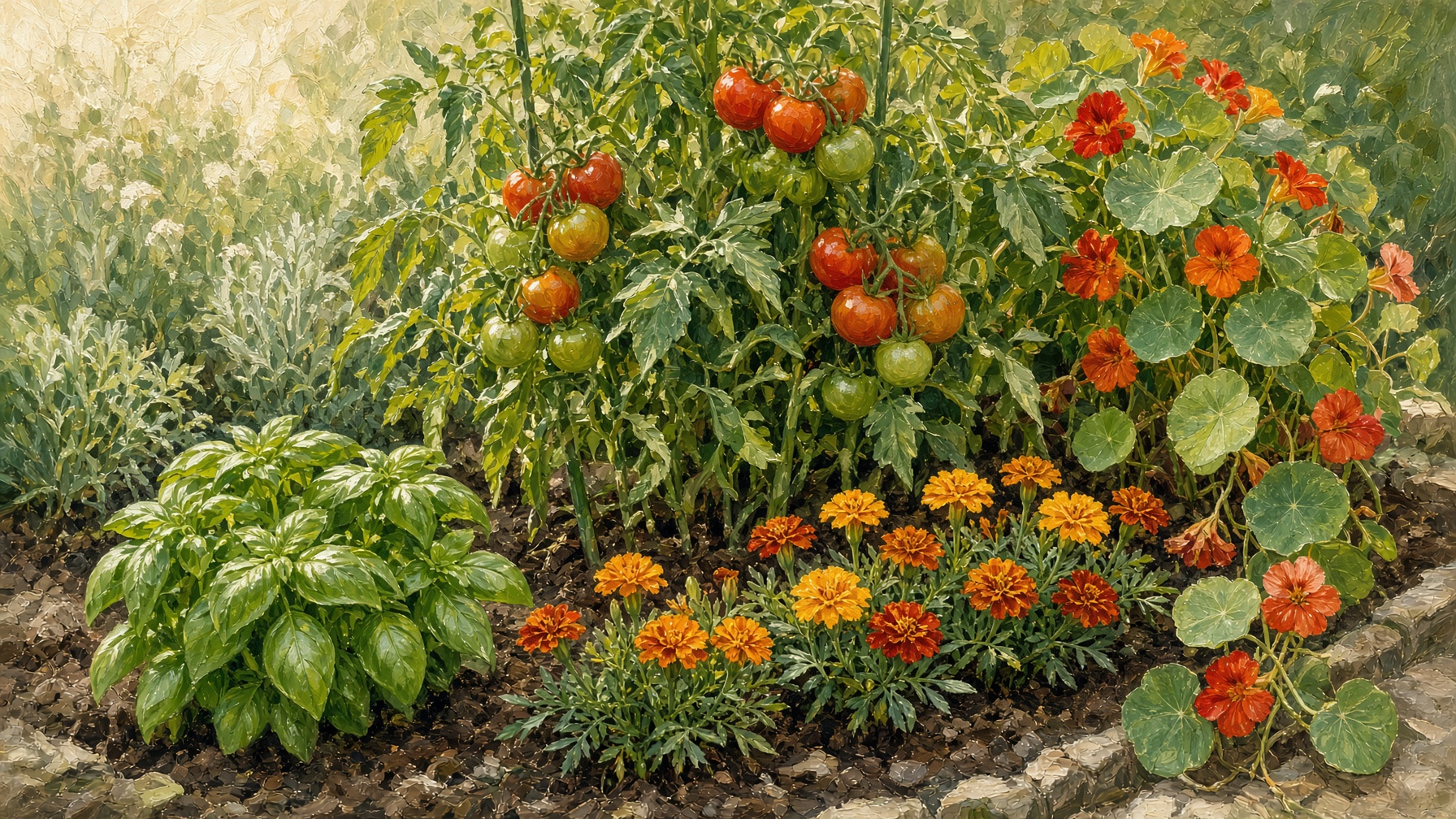
Companion Plants
A few neighbors earn their keep. A few do real harm. The rest are folklore with a pretty chart.

08
Pests and Trouble
Most disasters are a week of ignored leaves. Walk the row twice a week.
09
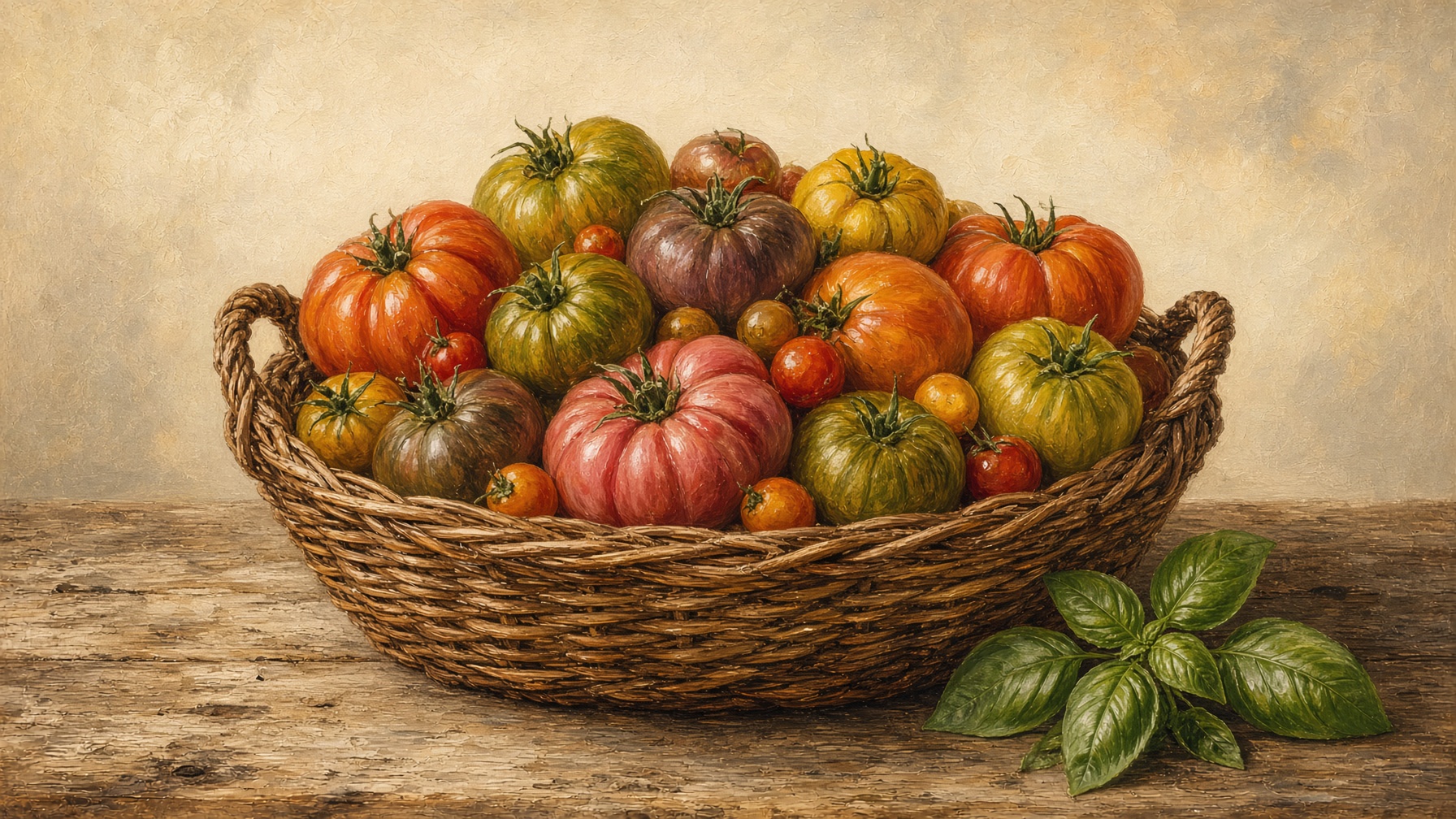
Harvest
Ripe is a color and a give, not a date on the packet.
10
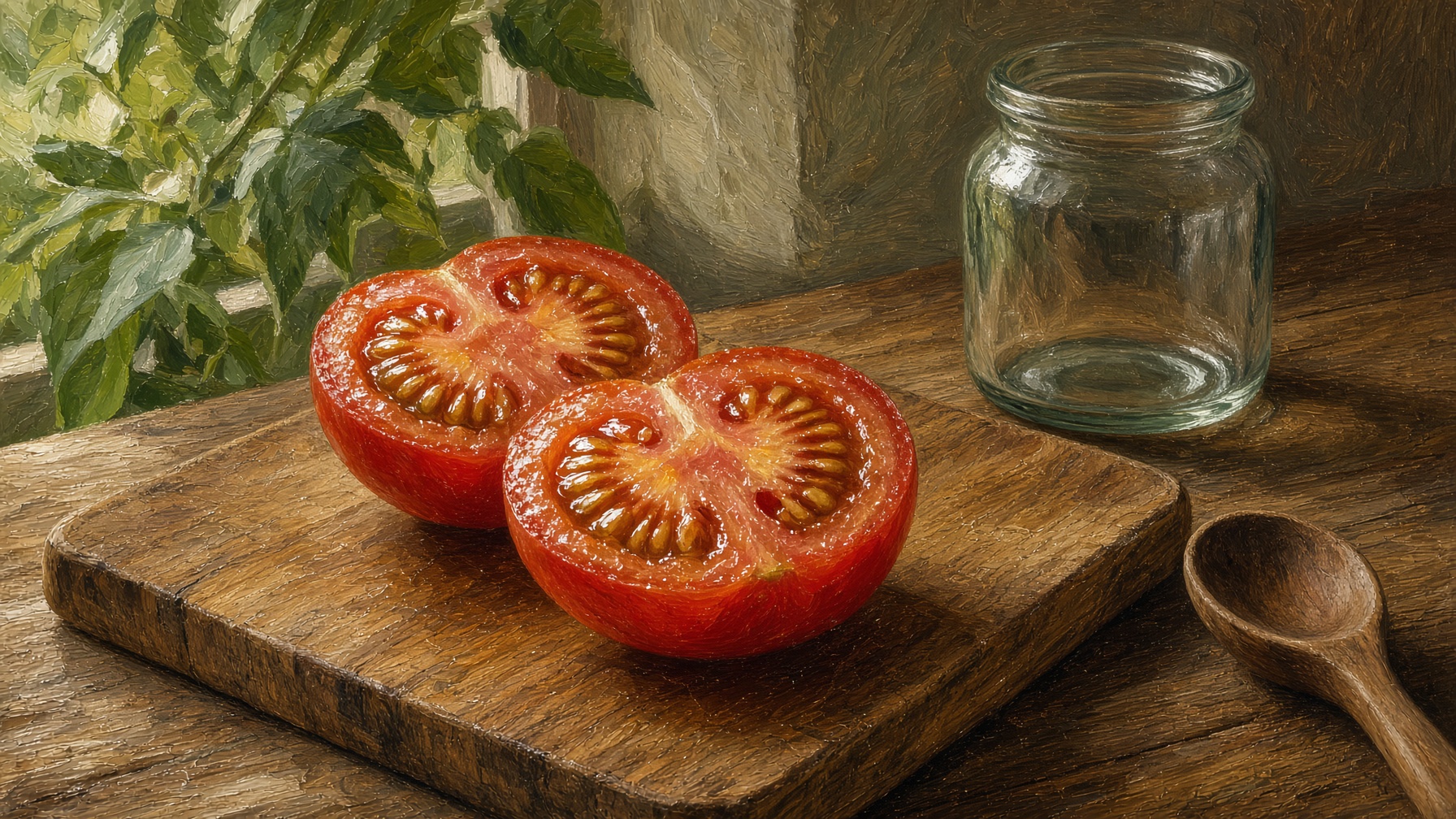
Harvesting Seeds
Tomato seed is wet seed. The gel around it is a germination inhibitor. Fermentation is how you take that gel off and keep a cleaner, longer-lived seed.

11
Storing Seeds
Properly dried tomato seed keeps four to six years easily, and can sprout at ten. The enemies are moisture, heat, and an unlabeled envelope.