Chapter 10 · Ferment, rinse, dry
Harvesting Seeds
Tomato seed is wet seed. The gel around it is a germination inhibitor. Fermentation is how you take that gel off and keep a cleaner, longer-lived seed.
Zone 6: transplant Mid- to late April. Harvest June – October.
Saving tomato seed is the most satisfying hour of the year if you grow open-pollinated plants. You are not just putting next spring in a jar. You are keeping a line that already liked your soil, your water, your pests.
You can rinse and dry without fermenting. Those seeds will often sprout next spring. They keep a year or two, they look shabby, and they carry more of the fruit’s pathogens. Ferment two to three days. It is the method seed savers use because it works.
- 01
Choose the right fruit
Save seed only from open-pollinated or heirloom plants — not F1 hybrids, which will not come true. Pick the best fruit on the healthiest plant: fully ripe, even overripe, never green. One excellent tomato is better than a bowl of average ones.
- 02
Scoop the gel
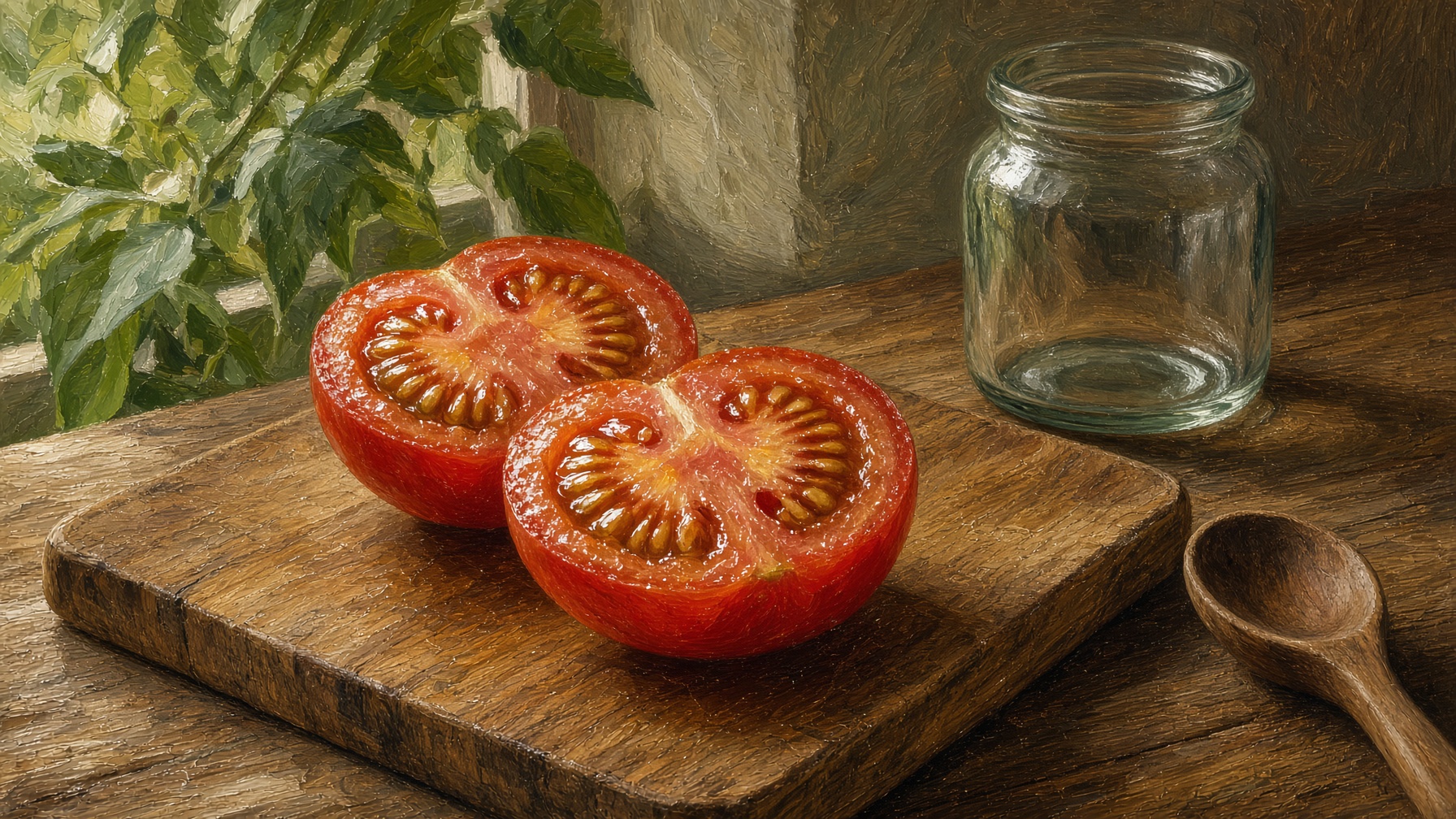
Cut the tomato across the equator, not stem to blossom. Squeeze or scoop the seed gel into a clean jar. Keep varieties in separate jars. Add a splash of water — about a quarter cup — so the mash can ferment.
- 03
Ferment two to three days
Cover loosely. Set the jar at room temperature, 70–80°F, out of sun. Stir once a day. A thin film of mold is normal; it is the gel coat breaking down, and it reduces some seed-borne diseases. Stop at two to three days. Longer fermentation cuts germination.
- 04
Rinse until the water runs clear
Add water, let viable seeds sink, and pour off mold, pulp, and floaters. Repeat. Rub remaining pulp in a strainer under a slow tap. Good seed feels gritty, not slimy.
- 05
Dry thoroughly
Spread seeds in a single layer on a ceramic plate, coffee filter, or screen — not paper towel, which glues itself to wet seed. Dry 7–14 days in moving air, away from sun and ovens. Stir daily. They are done when they snap, not bend.
- 06
Label at once
Variety, year, and where the plant grew. You will not remember in March. Use a pencil on kraft envelopes; ink can bleed if a jar sweats.
Tomatoes are mostly self-pollinating. For home use, a few feet between varieties is enough. If you are keeping a rare line pure, bag a few blossoms before they open, then save seed only from those fruit.