Chapter 06 · Water, prune, feed, repeat
Care Through the Season
Even moisture and dry leaves. That is most of the job.
Zone 6: transplant Mid- to late April. Harvest June – October.
After transplant the plant wants to grow roots for two weeks. Do not drown it, do not starve it, and do not pinch it yet. Once it is off and running, the rhythm is simple: water deep, mulch, tie new growth, and keep the lower stem clean.
Water
One to one and a half inches a week, in one or two soakings, at the base. Drip line or a soaker hose under mulch is the clean method. Overhead watering at night is how early blight finds you. Inconsistent water is how fruit splits and how blossom-end rot — a calcium-transport problem, not usually a lack of lime — shows up on the first big tomatoes.
Mulch
Once the soil is warm, a two-inch mulch of straw, shredded leaves, or untreated grass clippings holds moisture and stops rain from splashing soil onto leaves. Do not mulch a cold bed in April; you will keep the soil cold.
Pruning and tying
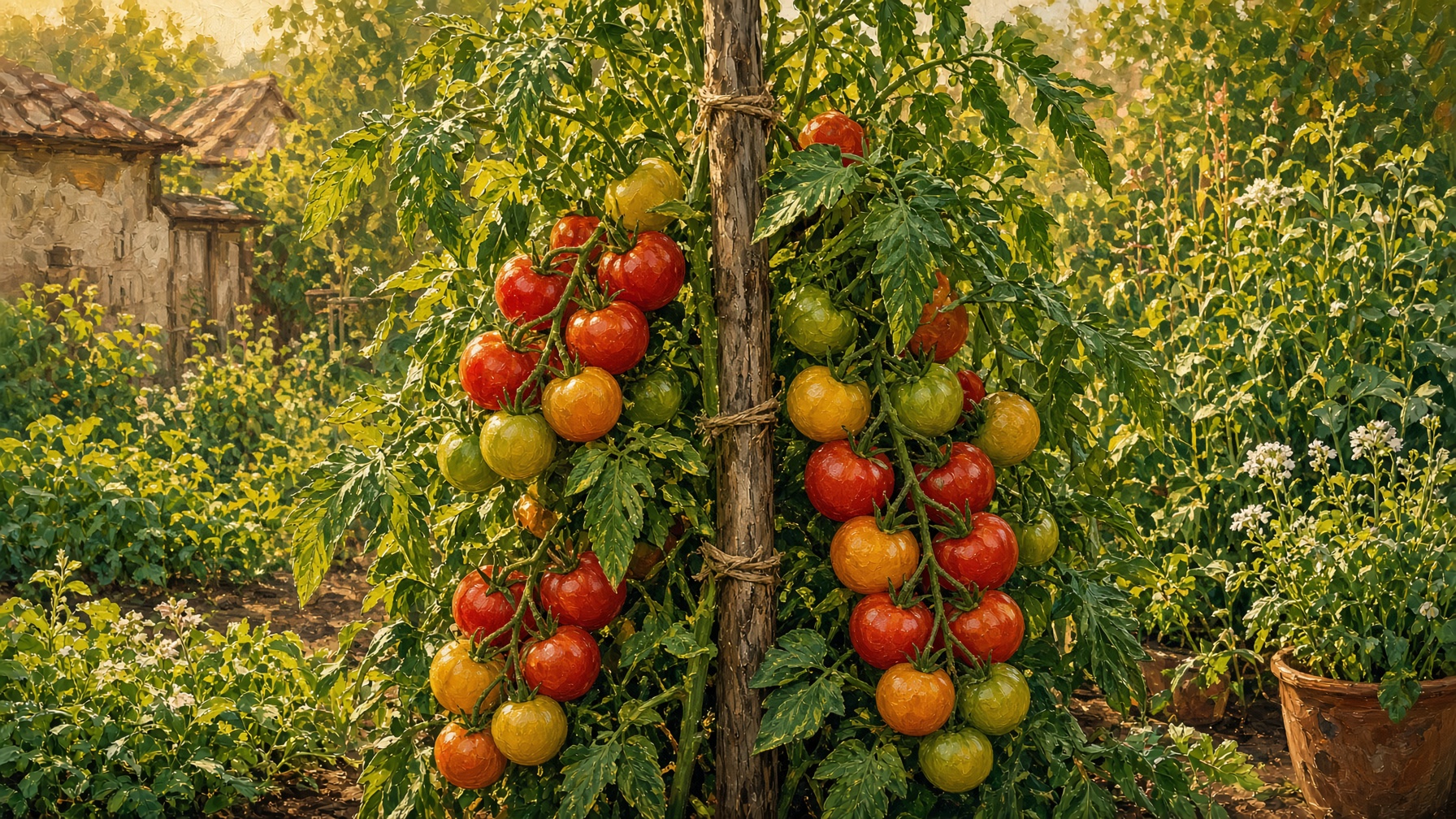
Determinate plants: leave them alone except to pull leaves that touch the soil. Indeterminate plants: choose one to three main stems. Suckers — the shoots in the leaf crotches — can be pinched when they are small. Over-pruning in high sun sunscalds fruit. Tie stems with soft twine every 8–12 inches of growth.
Feeding
If the bed was composted, a side-dress of compost or a low-nitrogen tomato fertilizer at first fruit set is enough. Yellow lower leaves on an otherwise strong plant are often age, not hunger. Pale new growth and no flowers is nitrogen without phosphorus and potassium — ease off the lawn-style feed.