Chapter 04 · Six to eight weeks before last frost
Starting from Seed
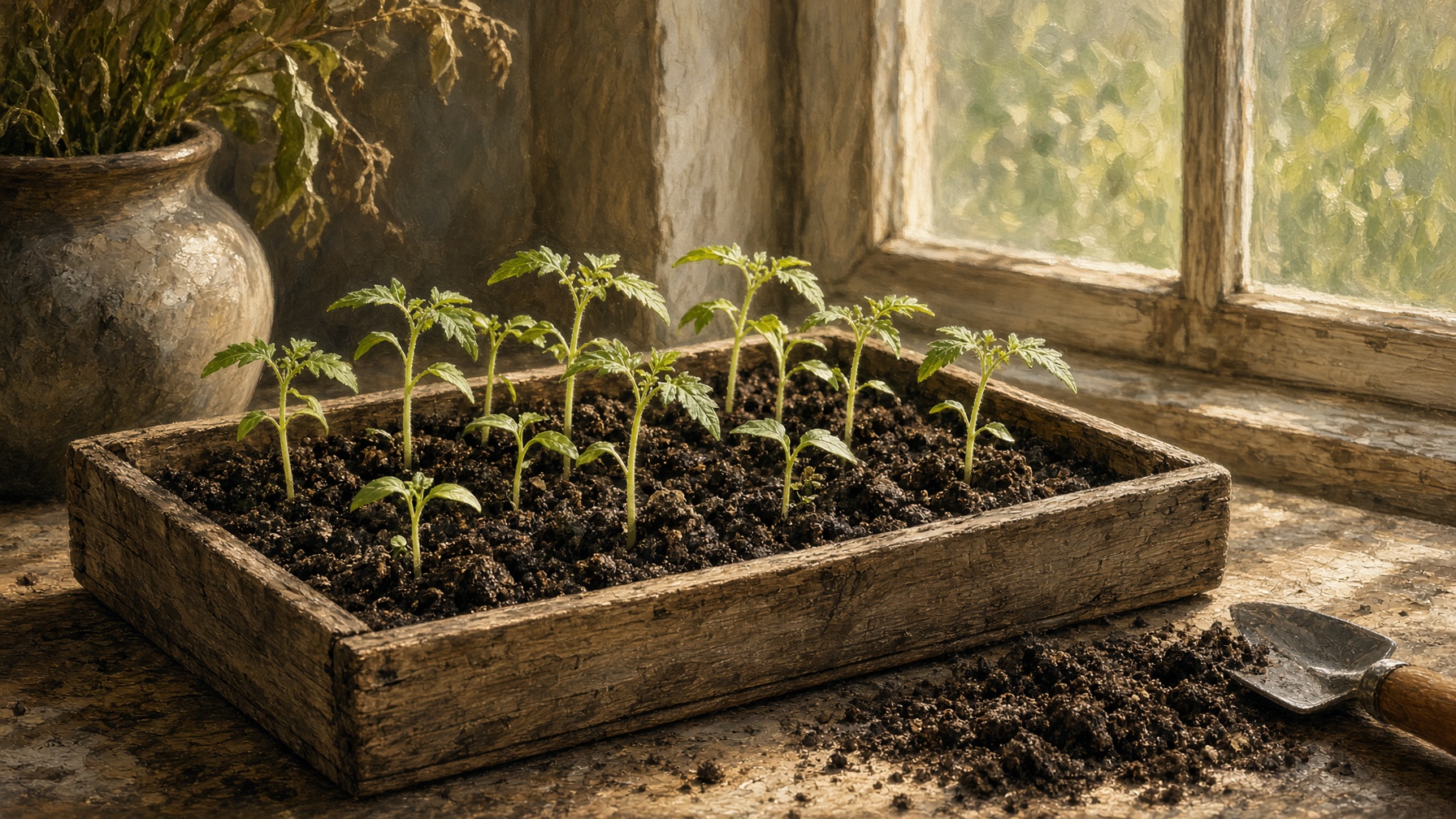
Stocky, unhurried seedlings beat leggy ones every time. Light and warmth do most of the work.
Zone 6: transplant Mid- to late April. Harvest June – October.
Direct-sowing tomatoes outdoors is a gamble except in the warmest zones. Start them inside. The packet’s “days to maturity” clock starts when the plant goes in the ground, so those indoor weeks are extra — they are how a 70-day variety ripens in a 90-day season.
- 01
Sow on time
Count back 6–8 weeks from your last frost (see Climate). Sowing in January in zone 5 makes lanky plants that stall after transplant. Better a little late than a month early.
- 02
Use a fine, sterile mix
Seed-starting mix, not garden soil. Moisten it so it holds together when squeezed, then fills a tray of 2-inch cells. Sow two seeds a quarter-inch deep. Label the row.
- 03
Keep them warm until they rise
70–80°F at the root. A heat mat under the tray is the usual tool. Germination in 5–8 days. Remove the mat once they are up; cool nights (60–65°F) make stockier stems.
- 04
Light, close and long
A south window is rarely enough. Hang shop lights or a full-spectrum bar 2–3 inches above the leaves, 14–16 hours a day. Raise the lights as the plants grow. Stretching means the light is too far or too short.
- 05
Thin, then pot up
Snip the weaker seedling at soil line. When true leaves are on and roots fill the cell, move each plant into a 3–4 inch pot. Bury the stem up to the first leaves; it will root along the buried stalk.
- 06
Harden off for a week
The week before transplant, take plants outside for a few hours in shade, then more sun each day, and finally a night out if it stays above 50°F. Skip this and the first hot afternoon will scorch them.