Chapter 07 · Who belongs in the bed
Companion Plants
A few neighbors earn their keep. A few do real harm. The rest are folklore with a pretty chart.
Zone 6: transplant Mid- to late April. Harvest June – October.
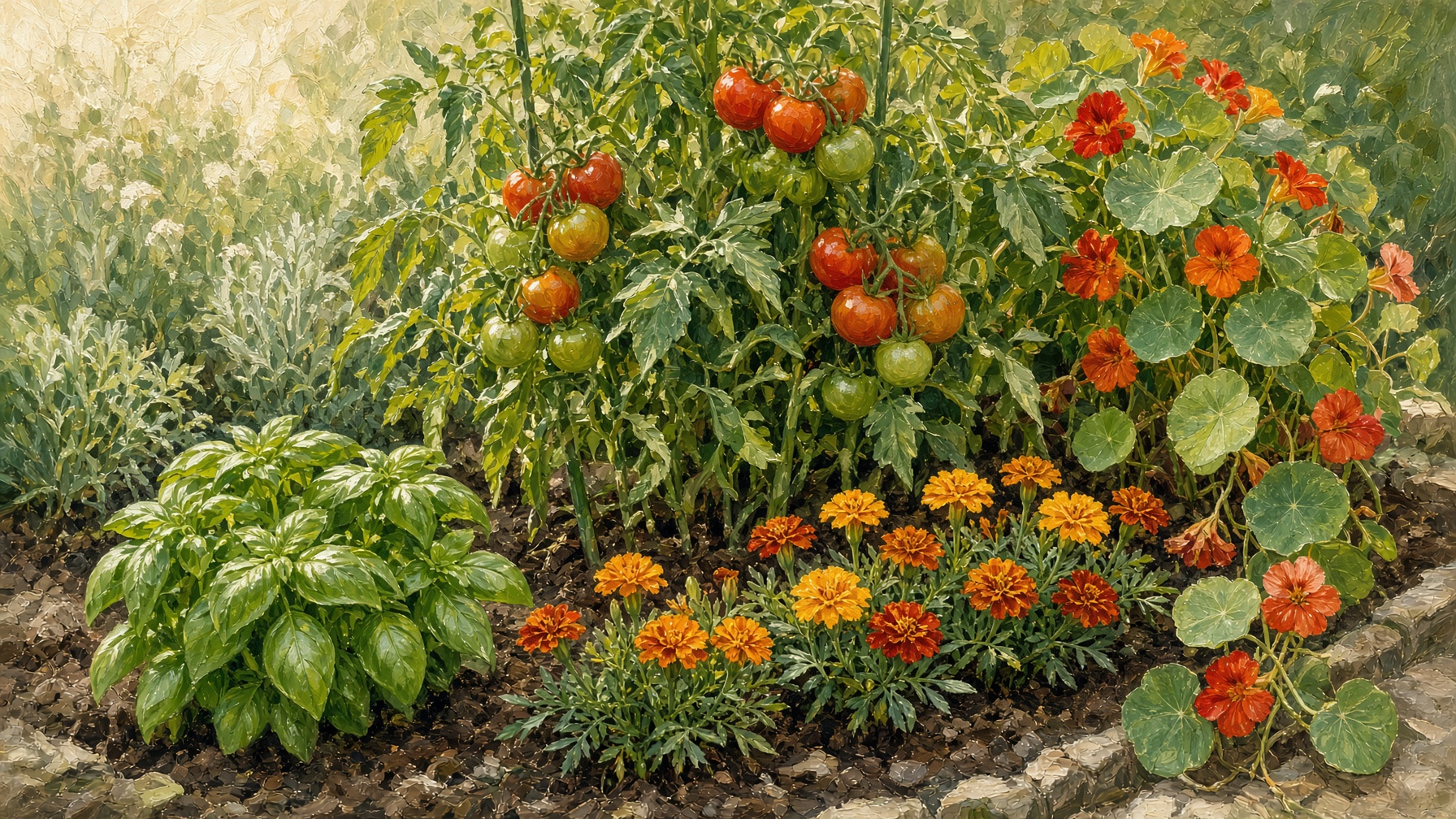
Companion planting is a mix of chemistry, pest ecology, and wishful thinking. What holds up for tomatoes is short: basil nearby to prime defenses, French marigolds as a nematode cover, flowers that feed the wasps that hunt hornworms, and a hard no to potatoes, fennel, corn, and black walnut.
Flavor claims — “basil makes tomatoes sweeter” — have been tested and have not shown up in the fruit. Plant basil anyway. It is a good neighbor, and you will eat it.

Defense priming
Basil
Ocimum basilicum
Basil volatiles help tomato plants switch on wound-response genes faster after pest attack. They also share the same sun and water rhythm, so the pairing is easy to manage.
In the bed. Plant one basil for every tomato, 12 inches off the stem, on the sunniest side. Let some plants flower to feed hoverflies and bees.
A 2024 peer-reviewed study found basil volatiles primed tomato defense signaling. The old claim that basil sweetens fruit has not held up in tasting trials.
Nematodes and whitefly
French marigold
Tagetes patula
Roots produce alpha-terthienyl, which is toxic to root-knot nematodes. The scent also confuses whiteflies. This is one of the few companion claims with field data behind it.
In the bed. For nematodes, grow a dense marigold cover the season before tomatoes, then turn it in. Same-year edging still helps with flying pests. Use French types, not African.
University trials show real nematode suppression when marigolds are grown as a prior cover crop. Interplanting the same season is weaker, but not wasted.
Trap crop
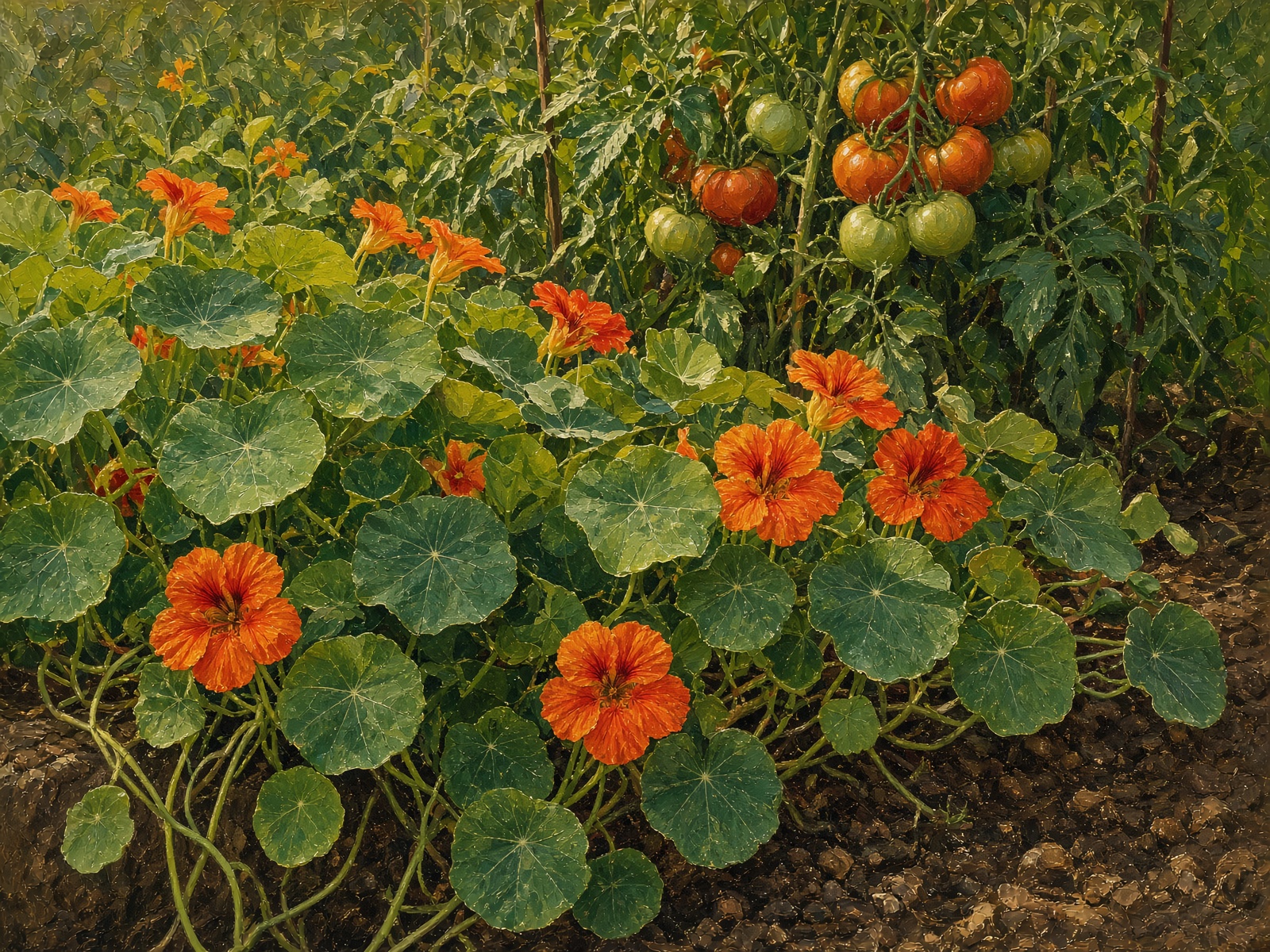
Nasturtium
Tropaeolum majus
Aphids and some beetles prefer nasturtium. They pull pressure off the tomatoes and the flowers feed pollinators at ground level.
In the bed. Trail them along the bed edge, not through the tomato canopy. Pull heavily infested stems so the trap does not become a nursery.
Classic trap-crop practice. Works when you inspect and remove pest-loaded growth, not when you ignore the plants.
Pollinators
Borage
Borago officinalis
Blue flowers are a magnet for bees. Anecdote says it deters tomato hornworm moths; the reliable benefit is more pollinator traffic in the bed.
In the bed. Tuck one or two plants at the ends of a row. They self-sow. Cut back if they shade young tomatoes.
Strong as an insectary plant. Hornworm-repellent claims are traditional, not well tested.
Edge planting
Garlic, chives, onions
Allium spp.
Sulfur compounds may confuse aphids and spider mites. They occupy a different root zone, so they do not fight tomatoes for space.
In the bed. Line the bed with chives or tuck garlic between plants. Do not crowd the tomato stem.
Garden-scale pest control is modest. Harmless, useful as a living border, not a silver bullet.
Space and soil
Carrots
Daucus carota
Carrots root deeper and finish before tomatoes fill the bed. The pairing uses vertical soil space without much competition.
In the bed. Sow carrots between newly transplanted tomatoes. Harvest the roots as the tomato canopy closes.
A space-efficiency pairing more than a chemical one. Works in small gardens.
Living mulch
Lettuce
Lactuca sativa
Lettuce shades the soil early, keeps weeds down, and is cut before tomatoes need the room. Cool-season leaves love the later shade of the vines.
In the bed. Transplant lettuce the same week as tomatoes. Harvest as soon as heads size up.
Practical intercropping. No special chemistry — just good timing.
Beneficial insects
Dill, calendula, parsley
Insectary herbs
Umbel and daisy flowers feed parasitic wasps and hoverflies that hunt hornworms and aphids.
In the bed. Grow a small insectary patch at the bed’s end. Use young dill; pull it before it gets huge.
Flowering insectaries are well supported. Mature dill can inhibit tomatoes, so keep it young or at a distance.